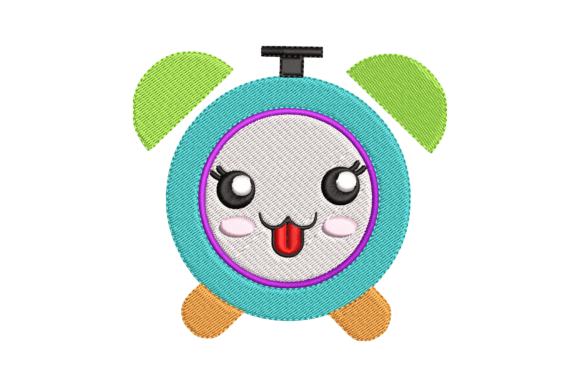
Alarm Clock: A Thoughtful Embroidery Design for Real Projects
As a designer who’s stitched hundreds of embroidery files across apparel, home goods, and boutique merchandise, I opened Alarm Clock expecting something playful — maybe a retro dial or cartoonish numbers. What I found instead was a quietly confident design: clean outlines, balanced negative space, and subtle texture in the hands and numerals that suggest movement without clutter. It doesn’t shout “Back To School” — it whispers it, with intention. That matters when you’re building a cohesive line of handmade products or curating digital design assets for your Etsy shop.
First Impressions: Mood, Scale, and Quiet Confidence
The Alarm Clock design lands as both nostalgic and modern — think mid-century typography meets minimalist embroidery sensibility. Its proportions are generous but not oversized, sitting comfortably at 3.5–4 inches wide (depending on your scaling), which makes it ideal for center-chest sweatshirt embroidery or the front pocket of a structured tote bag. There’s no aggressive shading or excessive satin stitch runs; instead, the layout leans into smart fill stitch transitions and crisp running stitch accents for the clock hands. That means fewer thread breaks, less rehooping, and cleaner results on cotton twill aprons or linen tea towels.
Where It Shines: Real-Life Project Fit
I tested Alarm Clock on three real projects: a natural canvas tote for a local teacher supply shop, a soft organic cotton baby onesie (for a “First Day of Preschool” gift), and a navy cotton drill cap for a small-batch boutique launch. On the tote? Perfect — the design held its shape across the slightly textured surface, and the contrast between light thread and raw canvas gave it handmade warmth without looking amateurish. On the onesie? Gentle, legible, and undeniably sweet — parents appreciated the quiet sophistication over cutesy graphics. And on the cap? It worked *because* it wasn’t too dense — minimal underlay, open areas between numerals, and no tiny interior details that vanish in the curve.
This isn’t just a machine embroidery design — it’s a versatile anchor piece. Pair it with simple monograms for personalized gifts, layer it subtly behind a student’s name on a graduation pillow cover, or use it as a standalone embroidered patch for backpacks and lunchboxes. For Etsy sellers, it slots neatly into “Back To School” collections without feeling seasonal or dated. For craft fair vendors, it adds quiet professionalism to kitchen towel sets or nursery decor bundles.
Where to Proceed With Care
Like any thoughtful embroidery file, Alarm Clock has boundaries — and knowing them saves time, thread, and customer trust. Avoid using it below 2.75 inches wide unless you’ve verified stitch clarity at that scale. Tiny numerals and fine hand outlines can blur on stretchy knits (like lightweight t-shirts) or highly textured fabrics (burlap, heavy terry) without proper stabilizer. On dark fabric, test thread colors carefully — light grays or creams may lack pop unless you add a white underlay or switch to ecru or oatmeal tones.
It’s also not built for ultra-dense decorative accents. You won’t want to cluster three Alarm Clock designs in one 4-inch hoop, nor should you rely on it for curved surfaces like baseball caps without confirming hoop compatibility and digitizing adjustments. And while it’s lovely on baby items, skip it on garments meant for frequent hot washing — delicate stitch density near the center hub could loosen over time if not stabilized properly.
What It Adds to Your Finished Product — Beyond Stitching
Here’s what stands out after stitching Alarm Clock across five different projects: it elevates perceived value without demanding premium pricing. Customers notice the balance — how the hands feel intentional, how the spacing breathes, how the overall shape grounds rather than dominates the item. That translates directly to buyer engagement: more photo saves on Instagram, higher conversion on product pages, and repeat requests for matching items (“Do you have this on a pillow too?”).
For small shop owners and creative entrepreneurs, that consistency builds brand recognition. When your embroidered sweatshirts, tote bags, and tea towels all share that same calm, considered aesthetic, customers begin to associate your work with quality restraint — not just busy decoration. And for digital product sellers, Alarm Clock works beautifully in printable mockups: its clean lines render clearly in black-and-white previews, and it scales cleanly across listing thumbnails and social banners.
Practical Designer Notes Before You Stitch
- Always test first — run it on scrap fabric matching your final project’s weight and texture.
- Check thread color contrast — especially on off-whites, heathers, and darks. A soft sage or warm taupe often reads clearer than stark white.
- Review stitch density — look for tight clusters around the center ring or numerals. If present, adjust tension or stabilizer accordingly.
- Confirm hoop size — don’t assume it fits your standard 4x4 unless verified. Some versions may require 5x7 for optimal detail retention.
- Inspect small details — zoom in on the tip of the minute hand and inner dial markings. Are they defined or fuzzy?
- Test light/dark backgrounds — use grayscale mockups to assess readability before committing to thread.
- Use appropriate stabilizer — medium-weight cutaway for knits, tear-away for stable wovens like cotton or linen.
- Verify licensing — if selling finished items or bundling Alarm Clock as part of a commercial embroidery collection, confirm usage rights upfront.
At its core, Alarm Clock isn’t about telling time — it’s about making time for intention. In a market flooded with loud, fast, trend-driven embroidery files, this one earns its place through clarity, adaptability, and quiet craftsmanship. Whether you’re prepping a custom order, building a holiday embroidery collection, or sourcing reliable design assets for your craft business, it’s the kind of embroidery file that works as hard as you do — and looks even better when it’s done.