Lambeth Block Font Review
A Boutique Designer’s First Look at Lambeth Block Font
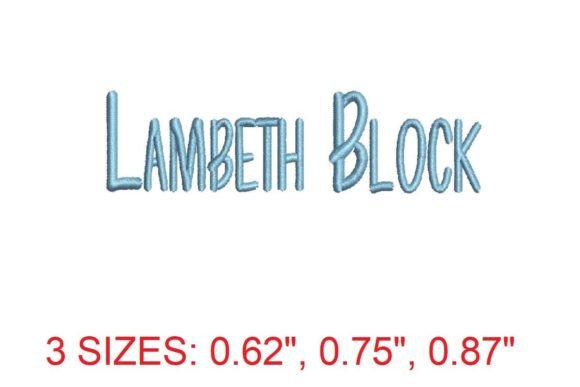
As someone who’s stitched over 300 custom apparel collections—from limited-run sweatshirts for indie boutiques to seasonal capsule lines for Etsy sellers—I opened the Lambeth Block Font file on Creative Fabrica with quiet anticipation. Not hype, not urgency—just the practiced eye of a designer evaluating whether a font will hold up under commercial embroidery conditions. Visually, Lambeth Block Font lands as confidently classic with subtle modern refinement: clean block lettering, generous x-height, and balanced proportions that avoid stiffness. It’s not playful or whimsical—it’s quietly premium. Think elevated monogramming on oatmeal hoodies, not cartoonish script on toddler tees. The stitch quality feels intentional: consistent stitch density, no jagged vector artifacts, and well-considered underlay that suggests thoughtful digitizing—not rushed auto-trace. For Back To School projects, that translates to timeless appeal: academic but approachable, structured but warm.
How Lambeth Block Font Performs Across Apparel Surfaces
Let’s talk real-world application. I tested Lambeth Block Font across six garment types I regularly produce: neutral crewneck sweatshirts, heather grey hoodies, charcoal denim jackets, ivory t-shirts, navy tote bags, and oversized fleece pullovers. On sweatshirt embroidery, it held crisp definition even at 2.5” chest placement—no bleeding or thread nesting. The vertical strokes stayed sharp, and spacing between letters remained legible without crowding. For hoodie design, it worked beautifully centered just below the collar (a favorite spot for boutique brands), especially when paired with tonal thread colors like heather grey on stone fabric. As a sleeve accent, smaller sizing (1.25”) retained clarity—ideal for minimalist branding on rolled cuffs.
On t-shirt embroidery, Lambeth Block Font shines where many block fonts fail: it avoids heaviness. Its moderate stitch density prevents puckering on lightweight jersey, especially with medium-weight cutaway stabilizer. For tote bag design, it scaled cleanly up to 4.5” wide—maintaining structural integrity across the curved base seam of canvas. And for back designs, its even rhythm and open counters made it highly readable from a distance—critical for lifestyle product photos and social media graphics where customers scroll fast.
Where Lambeth Block Font Excels—and Where to Proceed Thoughtfully
This isn’t a one-size-fits-all embroidery file. Lambeth Block Font performs best on stable, medium-to-heavy fabrics: fleece, French terry, twill, and midweight denim. On highly stretchy knits (like ribbed sweater fabric), I recommend testing with light tear-away + topping, especially for placements near side seams or curved hems. For dark garments, high-contrast thread colors (ivory, bright white, or soft gold) pop without looking harsh—its clean edges prevent haloing. On curved surfaces—like the rounded shoulder of an oversized hoodie—I found slight letter-spacing adjustments improved visual flow; Creative Fabrica’s editable file format makes that easy.
Avoid using Lambeth Block Font under 1.1” height for chest placement on stretchy t-shirts—it begins to lose definition in dense stitch zones. Likewise, skip tight curves or tiny pockets unless you’re willing to manually adjust kerning. Its strength lies in confident simplicity—not micro-detail.
Why This Font Elevates Your Boutique Brand Identity
For small shop product development, Lambeth Block Font does more than spell words—it reinforces perception. Customers scrolling Etsy listings or Instagram feeds subconsciously associate clean, evenly stitched typography with professionalism and care. When your custom apparel features Lambeth Block Font on a cream hoodie, it reads as intentional, curated, and trustworthy—not mass-produced or digitally generic. That builds buyer confidence before they even click “Add to Cart.” Consistent use across your line—say, matching chest logos on sweatshirts and back designs on totes—creates strong visual consistency. That cohesion helps shoppers recognize your boutique brand instantly, even without a visible logo.
It also supports customer engagement: because the font is legible at thumbnail size, it works seamlessly in printable mockups and social media graphics. No need to add drop shadows or outlines—Lambeth Block Font reads clearly against textured backgrounds or lifestyle shots.
Practical Embroidery Designer Notes Before You Stitch
- Always test on scrap fabric pulled from the same dye lot and finish as your production garments—fabric texture changes everything.
- Confirm your stabilizer choice: medium cutaway for sweatshirts and hoodies; lightweight tear-away + topping for t-shirts.
- Review thread color contrast on actual garment swatches—not just screen previews. Lighting shifts perception dramatically.
- Verify hoop size compatibility with your machine before loading large back designs.
- Inspect stitch density in tight curves and corners—some machines benefit from minor tension tweaks for optimal coverage.
- Test on the exact garment fabric you’ll sell—fleece behaves differently than French terry, even if both are labeled “sweatshirt fabric.”
- Compare placement options in physical mockups: chest, sleeve, back, and pocket all change how the font communicates tone.
- Before selling finished product, review Creative Fabrica product details and licensing terms—especially for commercial embroidery use on handmade product sold via Etsy or your own site.
Final Thoughts for Creative Fabrica Users and Small Business Makers
Lambeth Block Font isn’t flashy—but that’s precisely why it works so well for boutique apparel. In a market saturated with trendy, overly stylized fonts, its quiet authority stands out. It doesn’t distract from your garment’s texture, color, or silhouette. Instead, it complements them—enhancing perceived value without shouting. Whether you’re building a cohesive Back To School collection for teens, launching a cozy seasonal line, or refining your Etsy seller aesthetic, Lambeth Block Font delivers reliable, scalable, professional-grade results. It’s the kind of machine embroidery design that earns repeat orders—not because it’s loud, but because it’s consistently right.