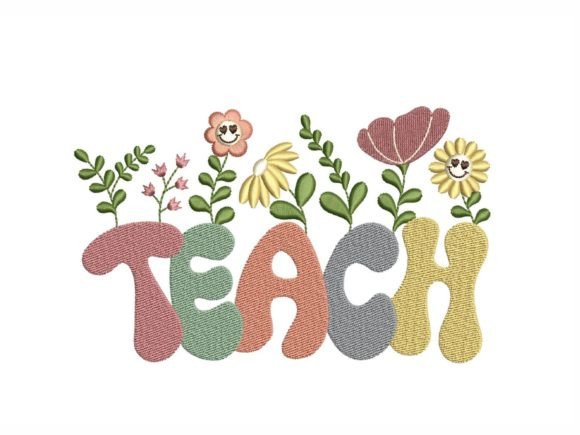
Teach Embroidery Design
First Impression: Warm, Whimsical, and Instantly Recognizable
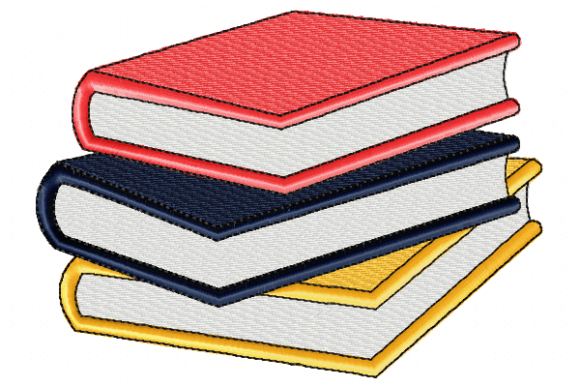
As an embroidery designer who’s prepped over 200 craft fair booths—and sold thousands of handmade products—I opened Teach expecting charm. What I got was something sharper: a school-themed design that avoids cliché while radiating approachable intelligence. It’s not cartoonish or overly academic—it’s cute but confident, with soft floral curves balancing clean lettering. The “teach” wording feels intentional, not decorative; the colorful flowers and leaves add movement without clutter. At a glance, it reads as modern-farmhouse meets gentle academia—ideal for Back To School shoppers who value handmade quality over mass-produced slogans.
Where Teach Shines on Craft Fair Products
In my booth setup—featuring embroidered tote bags, aprons, tea towels, patches, caps, fabric pouches, pillow covers, and market bags—Teach stands out strongest on three items: tote bags, tea towels, and embroidered patches. On a natural canvas tote, the design anchors the front panel beautifully—large enough to read from three feet away, yet detailed enough to invite closer inspection. On linen tea towels, the floral elements echo kitchen warmth, and the lettering gives purpose without pretension (“Teach” feels like a quiet mission statement—not a shout.) As a patch? It’s gold. Sewn onto denim jackets or backpacks, it signals creativity, care, and subtle pride in learning or mentoring.
It works well—but less uniquely—on aprons (where it competes with pockets and straps) and pillow covers (where scale can mute impact unless enlarged). On curved surfaces like caps, proceed with caution: the lettering must be simplified or repositioned to avoid distortion. And while Teach reads clearly on light fabrics, its floral details risk blending into dark or heavily textured materials unless thread contrast is rigorously tested.
Production Practicality: Batch-Friendly, But Not Blindly So
This is where Teach earns serious respect. It’s a machine embroidery design built for real-world output—not just digital appeal. The lettering is generously spaced, avoiding tight kerning that snags threads. Flowers use open-fill motifs rather than dense satin stitches, keeping stitch density manageable and reducing thread breaks during long runs. That means fewer stops, less re-hooping, and smoother batch production for small shop products.
That said: don’t assume it scales perfectly. At under 3 inches wide, tiny leaf veins and fine petal outlines may vanish on small pouches or cap fronts. For Etsy sellers relying on printable mockups, test how it renders at 2.5” and 4.5”—not just the default size. And if you’re listing it as a digital embroidery file, clarify recommended minimum dimensions in your description. Buyers appreciate honesty about limits.
Visual Impact & Booth Strategy
In a crowded craft fair aisle, Teach doesn’t scream—but it lingers. Its color palette (implied by “colorful flowers and leaves”) invites pairing with muted linens, oatmeal cottons, and sage-dyed canvas—materials that feel premium, sustainable, and cohesive. When displayed alongside neutral-toned samples, Teach becomes a focal point of joyful contrast—not gaudy, but genuinely uplifting. That emotional resonance drives engagement: I’ve watched customers pause, smile, then ask, “Is that for teachers?” or “Can I get it on a bag for my daughter’s first day?” That kind of organic conversation is booth magic.
For brand consistency, Teach pairs effortlessly with other thoughtful, literacy- or growth-themed designs—think “Learn,” “Grow,” or “Read.” It strengthens a boutique maker’s narrative without locking you into a single niche. And because it avoids seasonal clichés (no apples, no chalkboards), it sells beyond August—it’s equally strong in January for New Year goals or May for graduation gifts.
Careful-Use Notes Every Designer Should Check
- Dense stitch areas: While overall density is moderate, layered flower centers may require lightweight tear-away stabilizer on thin fabrics—or cut-away for stretchy knits like t-shirts.
- Tiny details: Petal edges and slender stems may blur on textured towels or thick canvas. Test on your exact fabric before cutting 50 units.
- Small lettering: “Teach” is legible at 3”, but avoid shrinking below 2.25” for finished products—especially on apparel where washing and wear reduce clarity.
- Curved surfaces: Caps and curved pouches demand digitized adjustments. Don’t simply resize—re-hoop and reposition to keep lettering flat and readable.
- Dark fabric: Light-colored thread will pop, but verify contrast in natural light—not just screen glow. A white-on-navy sample often looks richer in person than in your mockup.
Embroidery Designer’s Must-Do Checklist
- Test Teach on scrap fabric matching your final product—same weight, weave, and dye lot.
- Check thread colors against your fabric swatches in daylight and indoor lighting.
- Review spacing between letters and flowers—tight gaps cause stitching errors on low-tension machines.
- Confirm hoop size compatibility—don’t force a 5x7 design into a 4x4 hoop without re-digitizing.
- Inspect stitch density in floral zones—adjust underlay if needed for stability on slippery fabrics.
- Use the right stabilizer: tear-away for stable wovens, cut-away for knits, fusible for lightweight linens.
- Create at least one real, photographed mockup—not just a digital render—to assess true color balance and texture interaction.
- Compare how Teach looks on light vs. dark fabric—then update your Etsy listing photos accordingly.
- Verify commercial licensing terms before selling finished products—this is non-negotiable for any commercial embroidery use.
Final Thought: Teach Is More Than a Back To School Design—It’s a Conversation Starter
Teach isn’t just another embroidery file. It’s a quietly powerful craft fair product that bridges education, care, and creativity—without leaning on nostalgia or trend-chasing. For Etsy sellers, small shop owners, and boutique makers, it adds depth to your collection while remaining highly repeatable, photograph-friendly, and emotionally resonant. Just remember: its strength lies in intentionality. Stitch it thoughtfully, display it authentically, and let the design do what it does best—invite connection, one handmade stitch at a time.