Teacher Heart Embroidery Design Review
A Warm, Professional First Impression for Small Business Branding
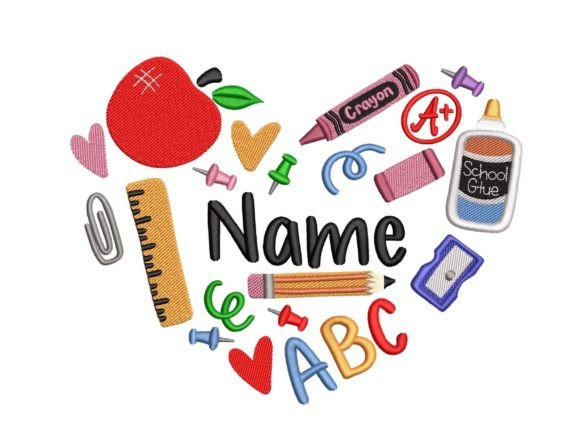
As an embroidery designer who’s digitized and stitched thousands of commercial projects—from boutique aprons to café staff caps—I immediately recognize Teacher Heart as a design with quiet confidence. It’s not flashy or overly detailed, but its heart-shaped structure—filled with subtle school tools—feels intentional, approachable, and authentically warm. For small business owners building brand identity through custom apparel and embroidered patches, that balance matters. It reads as friendly *and* professional—not childish, not sterile. Whether you’re a florist adding charm to staff aprons or a handmade studio launching Back To School merch, Teacher Heart lands as handmade product with polish.
Where Teacher Heart Shines in Real Business Use
This machine embroidery design excels where clarity, consistency, and emotional resonance matter most:
- Embroidered patches: Its clean outer heart contour holds shape well at 2.5”–3.5”, making it ideal for sew-on or iron-on patches on tote bags, denim jackets, or boutique packaging.
- Staff uniforms & aprons: As a chest accent (left or right), it communicates care and community without overwhelming the garment—especially effective for schools, libraries, tutoring centers, or family-run cafés.
- Cap embroidery: On structured front panels, the heart’s symmetry ensures even stitch distribution. Paired with minimal thread color changes, it avoids puckering on curved surfaces.
- Tote bag design & product labels: When stitched on natural canvas or cotton twill, Teacher Heart elevates everyday items into branded keepsakes—ideal for Etsy sellers offering teacher-themed gifts or local businesses handing out event merch.
- Commercial embroidery projects: Because it avoids fine linework and dense fill areas, it runs reliably across multiple hoop sizes and fabric types—reducing re-hooping and thread breaks during batch production.
Smart Placement: Where to Use Teacher Heart Thoughtfully
Even strong designs need context. Here’s where extra attention pays off:
- Small patch sizes under 2”: Test stitch first—the school tools inside the heart may lose definition. Simplify by omitting interior details or using a streamlined version for micro-patches.
- Cap fronts with high curvature: Choose a low-profile stabilizer and reduce top tension slightly. The heart’s rounded edges are forgiving, but avoid placing near the cap’s seam line where distortion risks increase.
- Dark uniforms or textured fabric: Confirm thread colors offer enough contrast. A soft cream or light sage works beautifully on navy or charcoal—but always run a test on your exact fabric before full production.
- Frequent-wash items (e.g., aprons, kids’ tees): Reinforce with cutaway stabilizer and lock stitches at start/end. While Teacher Heart doesn’t appear overly dense, verify stitch density in the file notes—if unspecified, assume medium fill and adjust stabilizer accordingly.
How Teacher Heart Strengthens Your Brand Identity
For small business merch, every stitch contributes to perception. Teacher Heart subtly reinforces trust and warmth—qualities customers associate with educators, caregivers, and community-focused brands. When stitched on a bakery apron or pet boutique tote, it signals intentionality: “We care about people, not just products.” That emotional cue boosts buyer engagement and repeat recognition. Unlike generic clipart-style hearts, this design feels curated—supporting visual consistency across digital embroidery files, printable mockups, and finished product photography. It also pairs naturally with handwritten fonts or minimalist typography, making it easy to integrate into broader design assets without clashing.
Practical Designer Notes Before You Stitch
Before committing to bulk production or client delivery, follow these field-tested steps:
- Test the embroidery file in black and white first—this reveals spacing issues, jagged curves, or unintended overlaps that color can mask.
- Check how Teacher Heart renders at your smallest intended patch size (e.g., 2” wide). If interior tools blur, request or create a simplified variant.
- Review thread color contrast against your target fabric—especially for darks or heathers. Light neutrals often outperform brights for longevity and versatility.
- Inspect spacing between elements: Are school tools too tight? Does the heart outline breathe comfortably? Tight spacing increases stitch density and wear risk.
- Confirm hoop size compatibility—most standard versions will fit a 4”x4” hoop, but verify before digitizing additional sizes.
- Always test on real fabric with your preferred stabilizer. Fabric texture dramatically affects how cleanly the heart shape and tool outlines stitch out.
- Create a physical mockup for client approval—not just a digital preview. Customers respond to tactile quality, especially for premium handmade product positioning.
- Compare Teacher Heart beside your other design assets. Does it share a consistent weight, scale, and tone? Visual harmony builds stronger brand identity.
- Confirm commercial licensing is included. Since this is intended for small business merch and custom apparel, ensure your purchase grants rights for resale, promotional use, and embroidered patch production.
Final Thought: More Than Just a Back To School Design
Teacher Heart isn’t limited to August launches or classroom walls. Its gentle symbolism translates powerfully across service-based and creative small businesses—from florists celebrating “teachers of nature” to pet brands honoring “furry life coaches.” As an embroidery designer, I recommend it for teams who value authenticity over trend-chasing and want their custom apparel to feel human, not automated. When executed well—with smart stabilizer choices, thoughtful thread selection, and purposeful placement—it becomes more than decoration: it’s a quiet signature of care, crafted stitch by stitch.